
Start with the label
When we authenticate a shirt, the product code is one of the first things we look for. It gives us something concrete to investigate rather than relying on how a shirt looks at first glance.
But manufacturers do not all use the same system. Some use a short style code, some use a longer product number, some combine a style code with a colourway, and older shirts can use completely different formats.
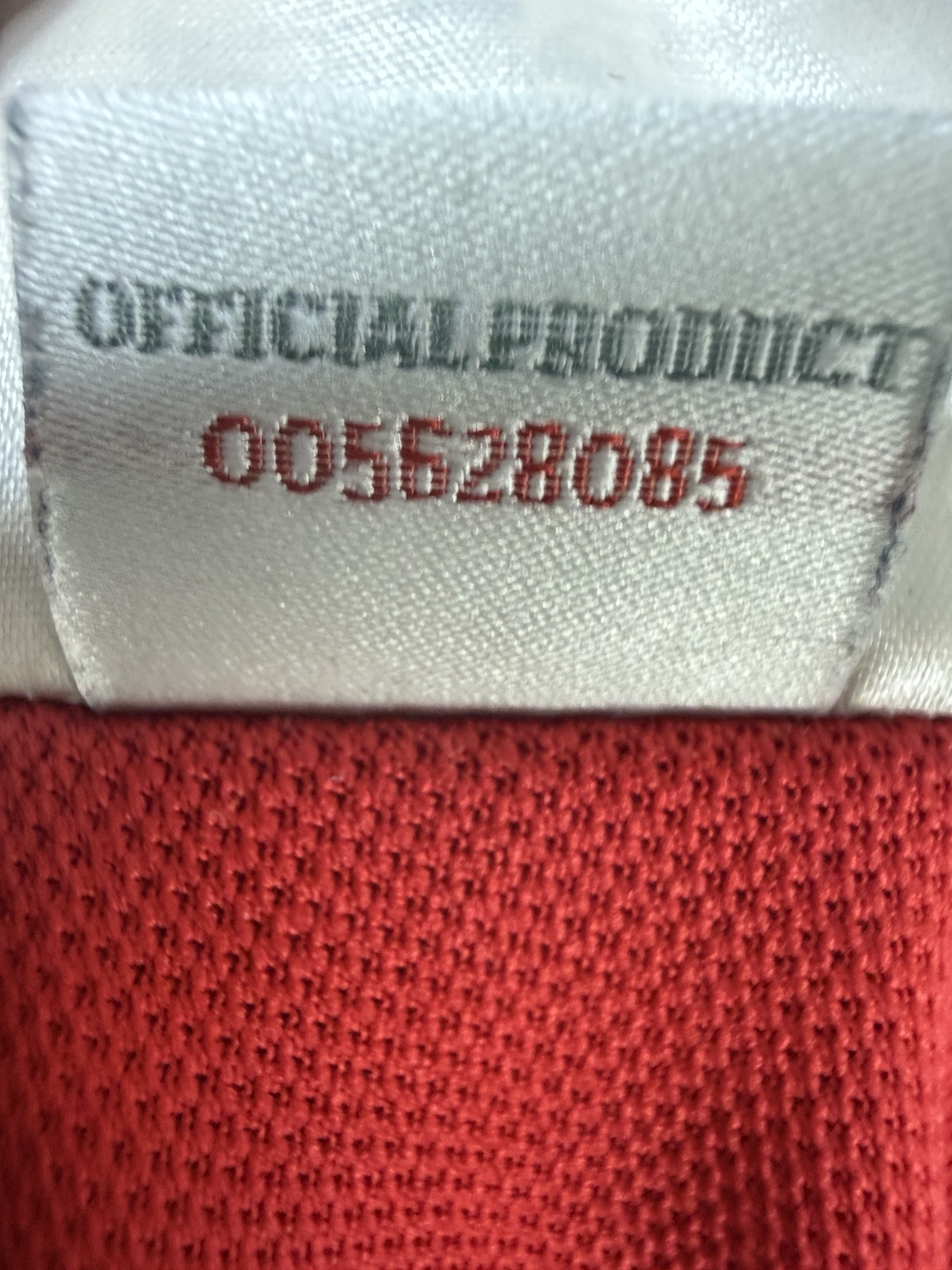
Finding the code online is only the beginning. The result needs to identify the same shirt that is actually in front of you.
What can a product code tell you?
Depending on the manufacturer and era, a product or style code can help establish the model, colourway, club, season context, version and sometimes even whether you are looking at a replica or authentic specification.
That makes it particularly useful when a shirt has been listed with a vague description such as “rare vintage Adidas shirt” or “player version”. The code can narrow down exactly what the garment was made as.
A modern adidas example: Liverpool 25/26
Modern adidas shirts are a good illustration because the identifier can be matched against the exact product rather than simply the club. Liverpool returned to adidas for 2025/26, and the supporter home jersey uses JV6423.
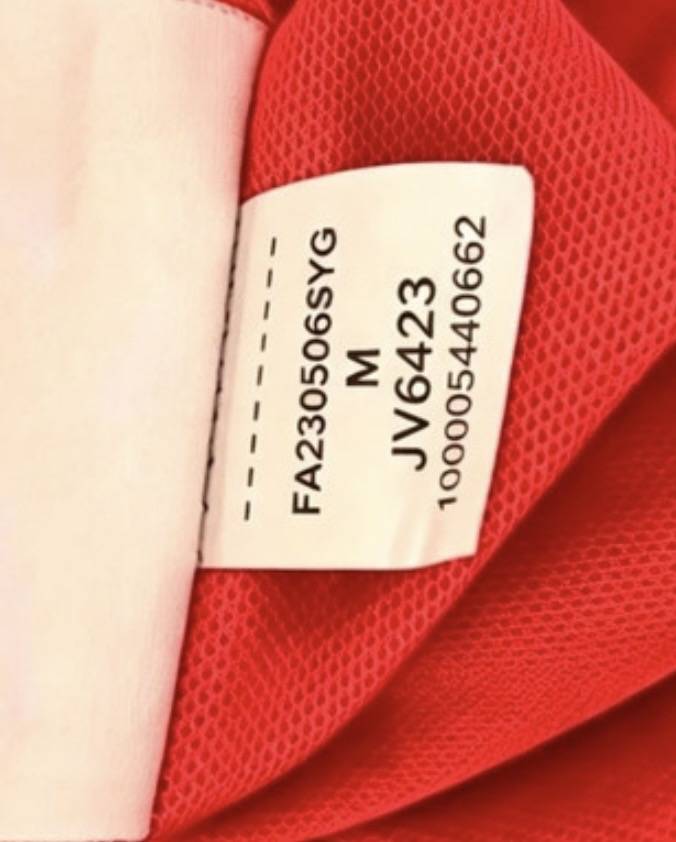
For the standard Liverpool 25/26 Home Jersey, this is the code we expect to see. The important part is not memorising the number — it is being able to compare the number against the exact product and then check that the physical shirt agrees.
The same principle applies to the Home Authentic version, which uses JY4237. Replica/supporter and authentic shirts can therefore have different identifiers even though both are Liverpool 25/26 home shirts.
Now compare that with a counterfeit
This is where product codes become particularly useful — and where people can get caught out.
The following two photographs are from the counterfeit adidas Liverpool example we have been discussing. The shirt carries IP8211 internally and the swing tag carries P95985 with the generic wording “ADIDAS JSY”.
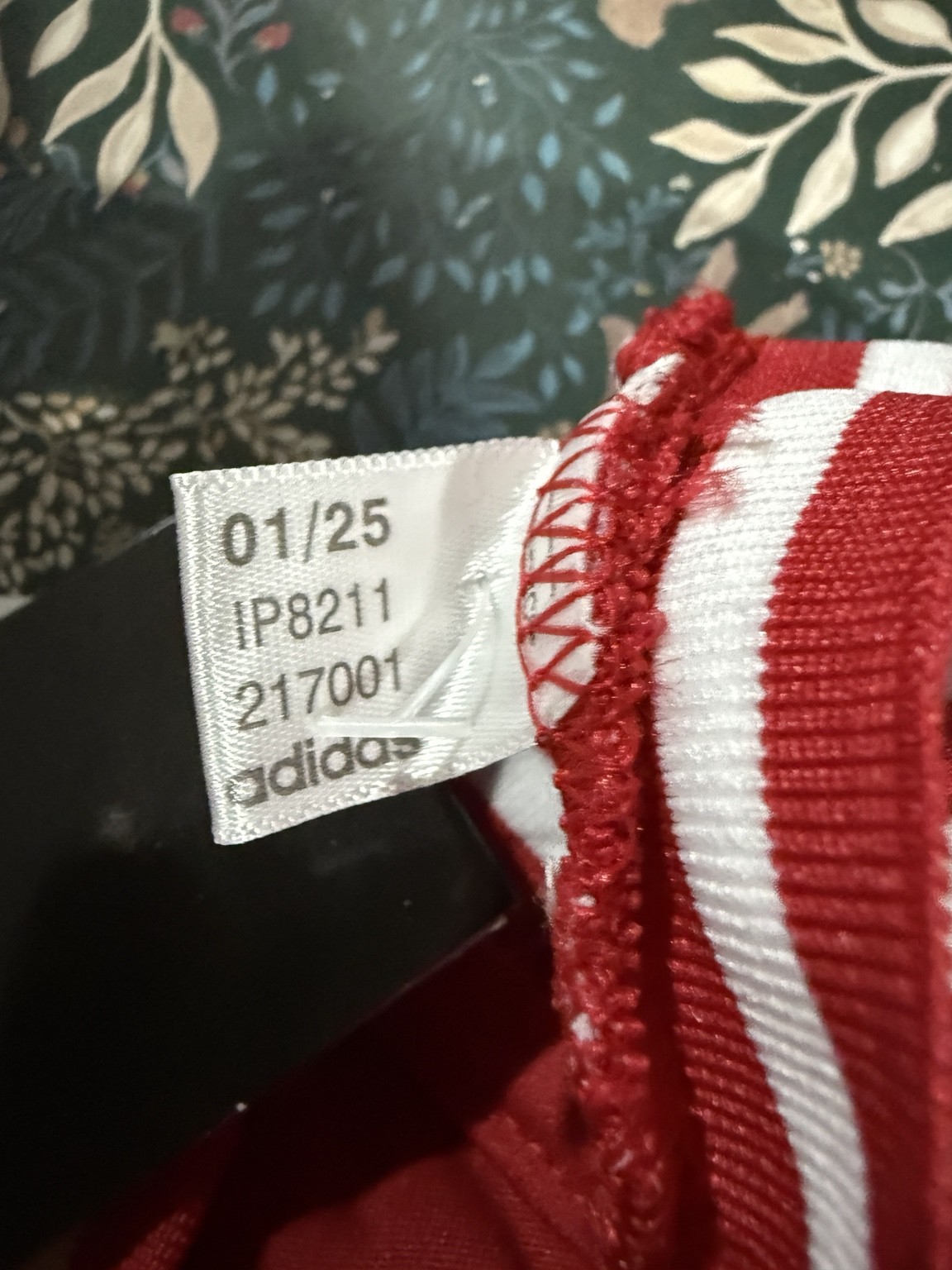
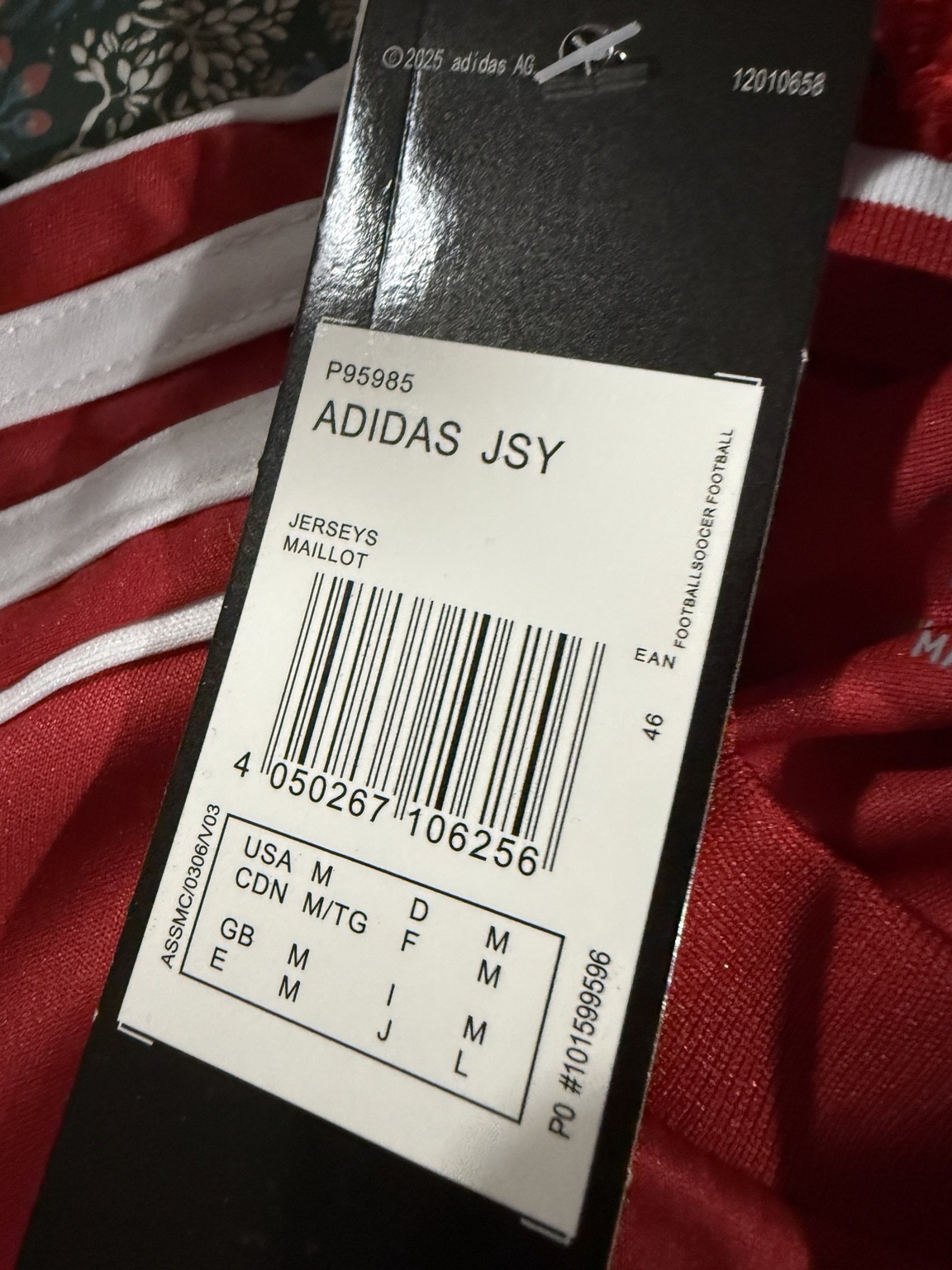
These are examples where the identifier itself becomes part of the authentication evidence. Do not assume a code is genuine simply because it looks professionally printed or contains a plausible date.
This is also why we would never authenticate a shirt from a product code alone. Counterfeit manufacturers can copy identifiers from genuine garments, and some codes become heavily associated with counterfeit production.
Older adidas shirts show why context matters
Not every adidas code looks like a current one. Older shirts can use a very different label format, and the code may be shorter or appear alongside a production date.
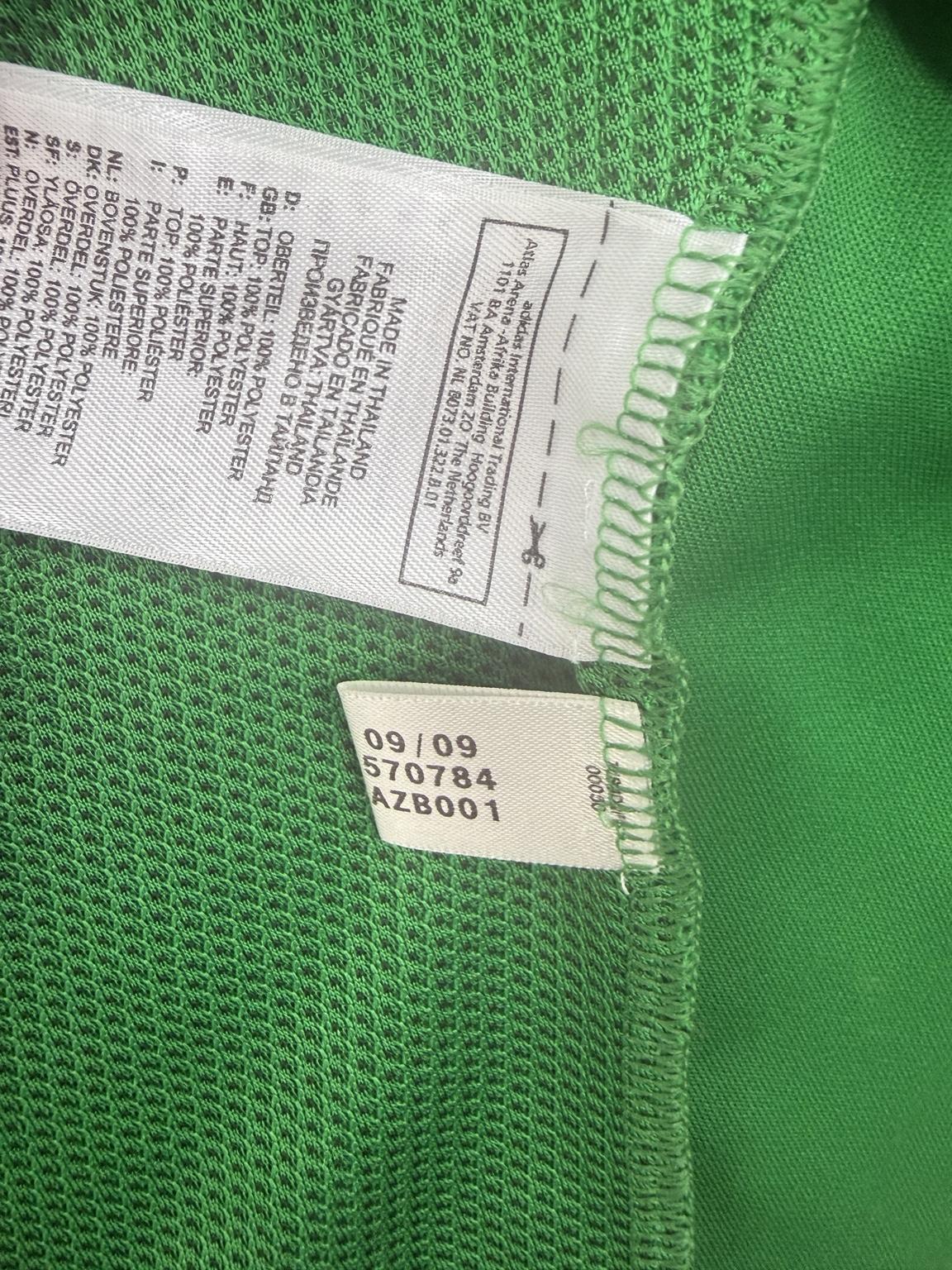
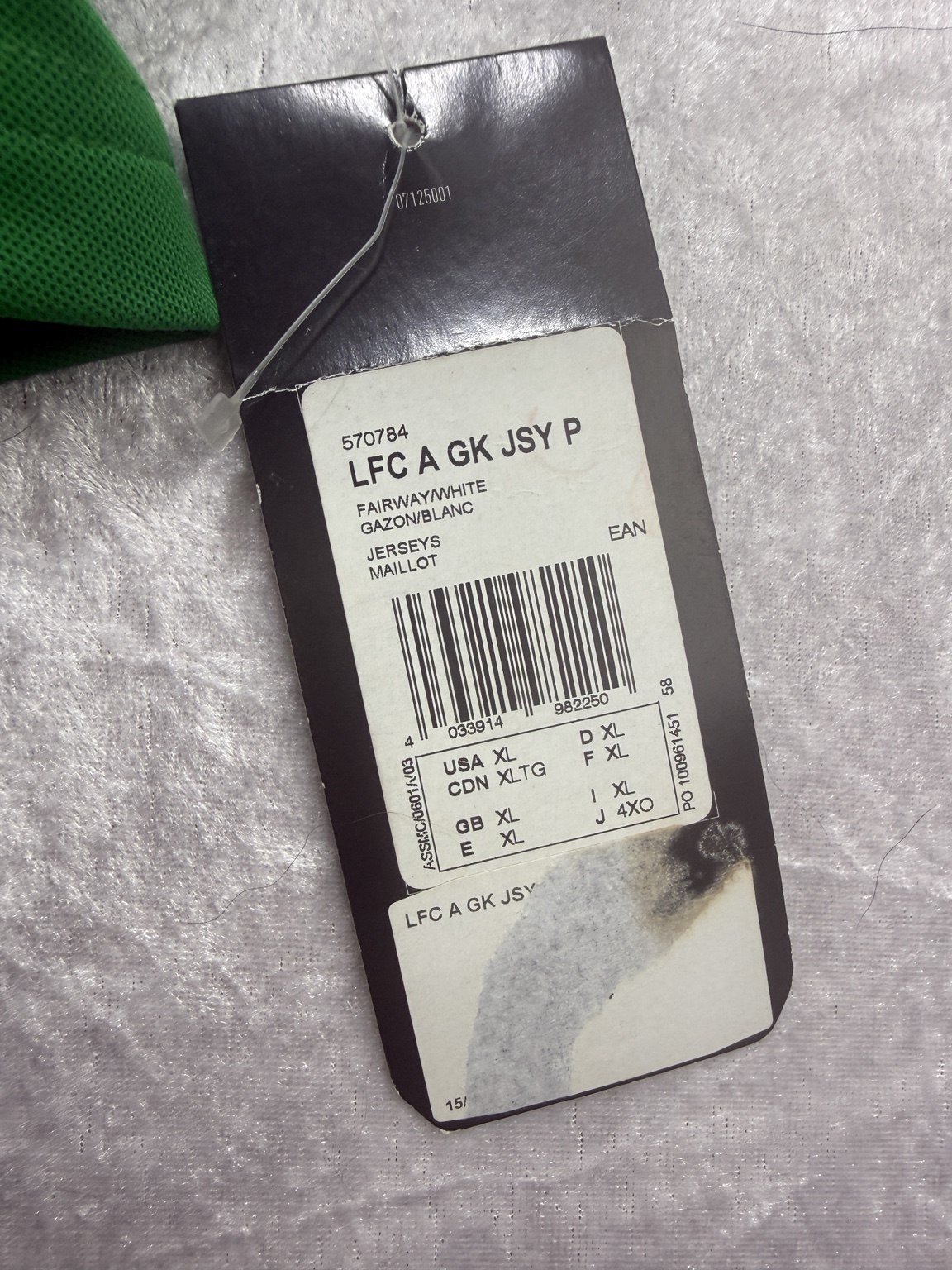
Here, the product code is much more useful when combined with the wording on the tag, the club-specific details and the actual construction of the goalkeeper shirt.
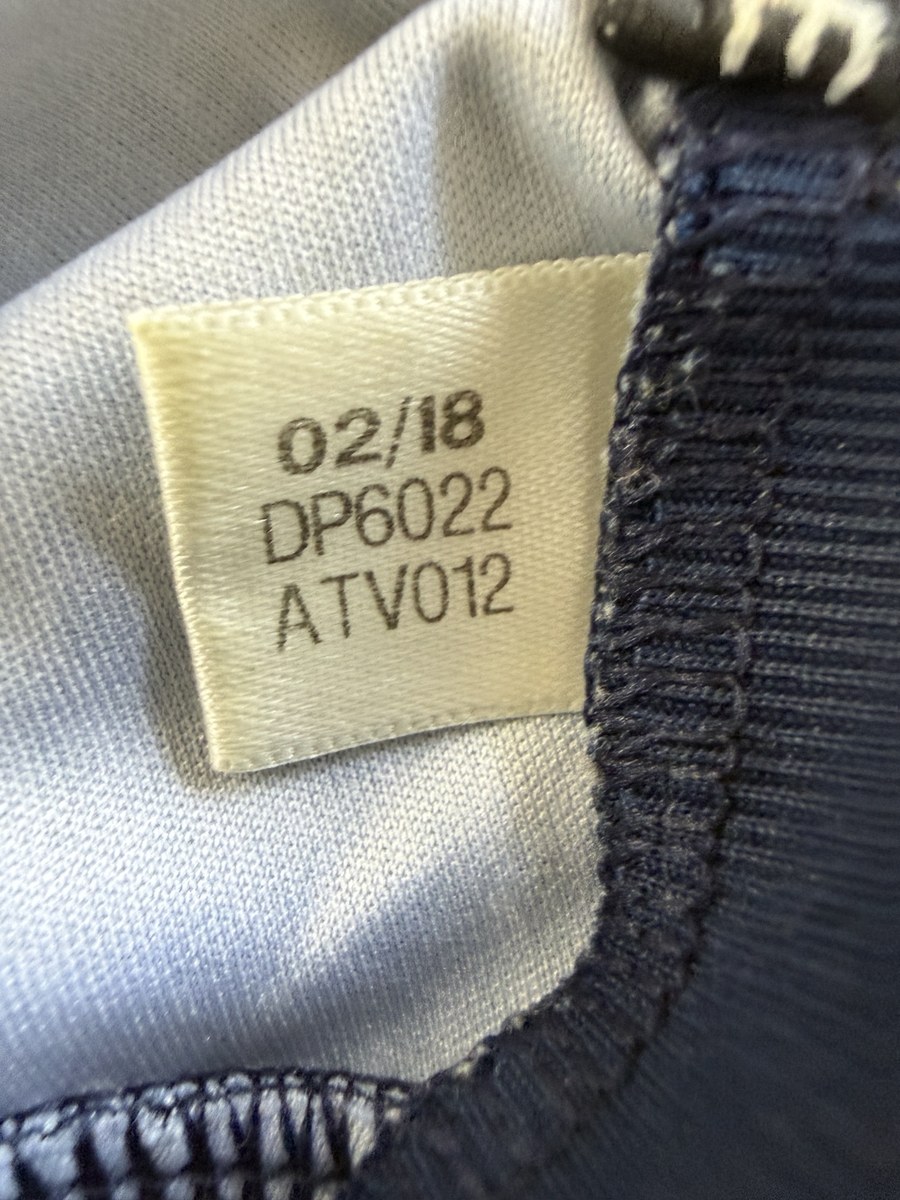
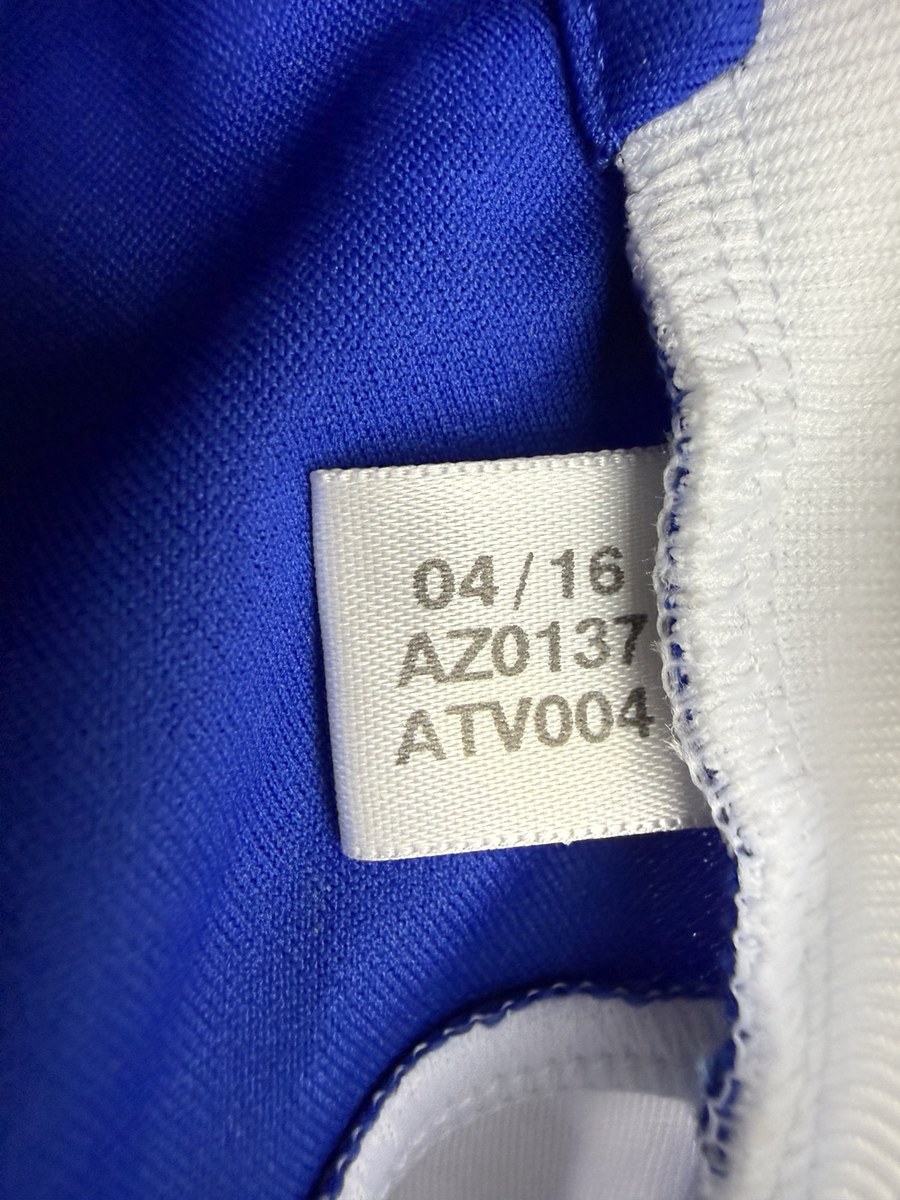
These examples are useful because they show why an authentication guide should not teach one fixed label layout. Manufacturers change their labels over time. What matters is whether the details make sense for the garment and era.
A newer adidas example: Aston Villa
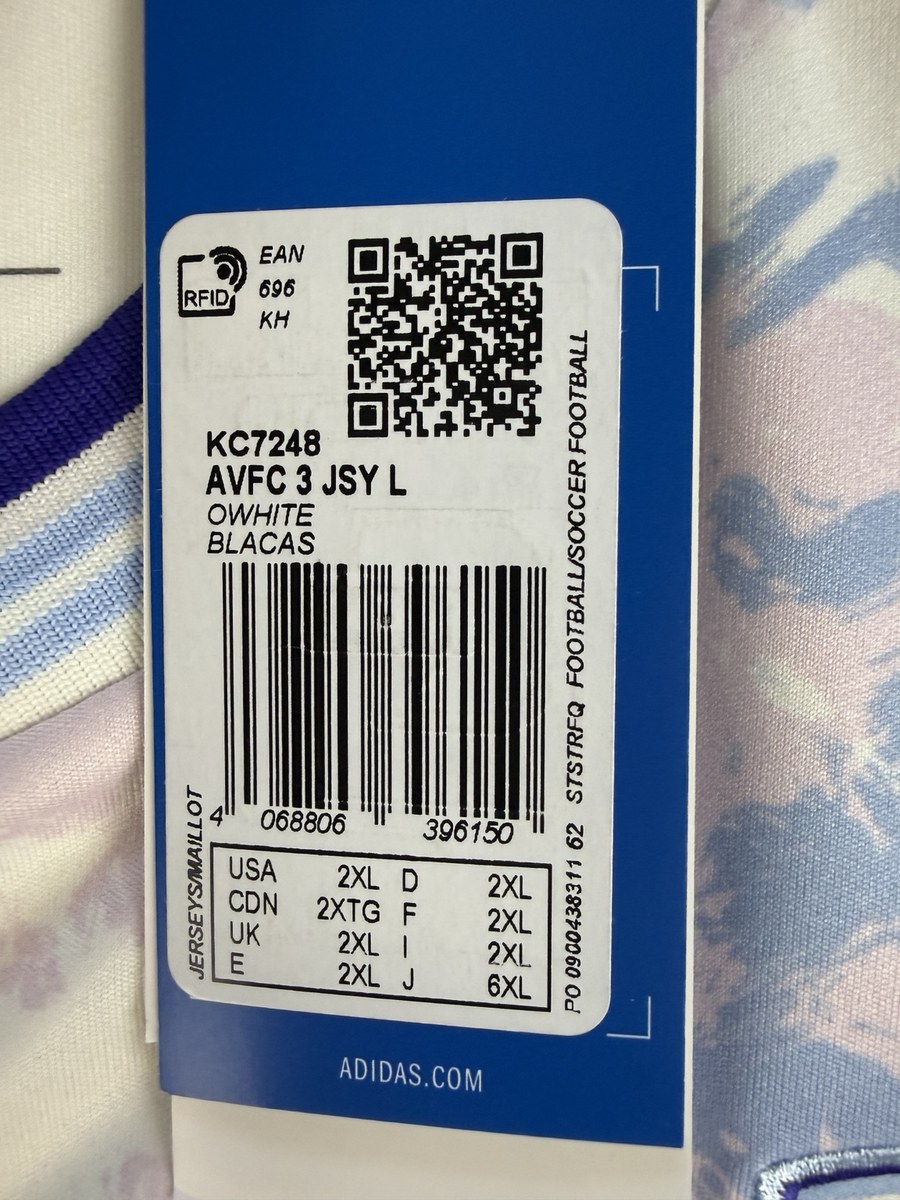
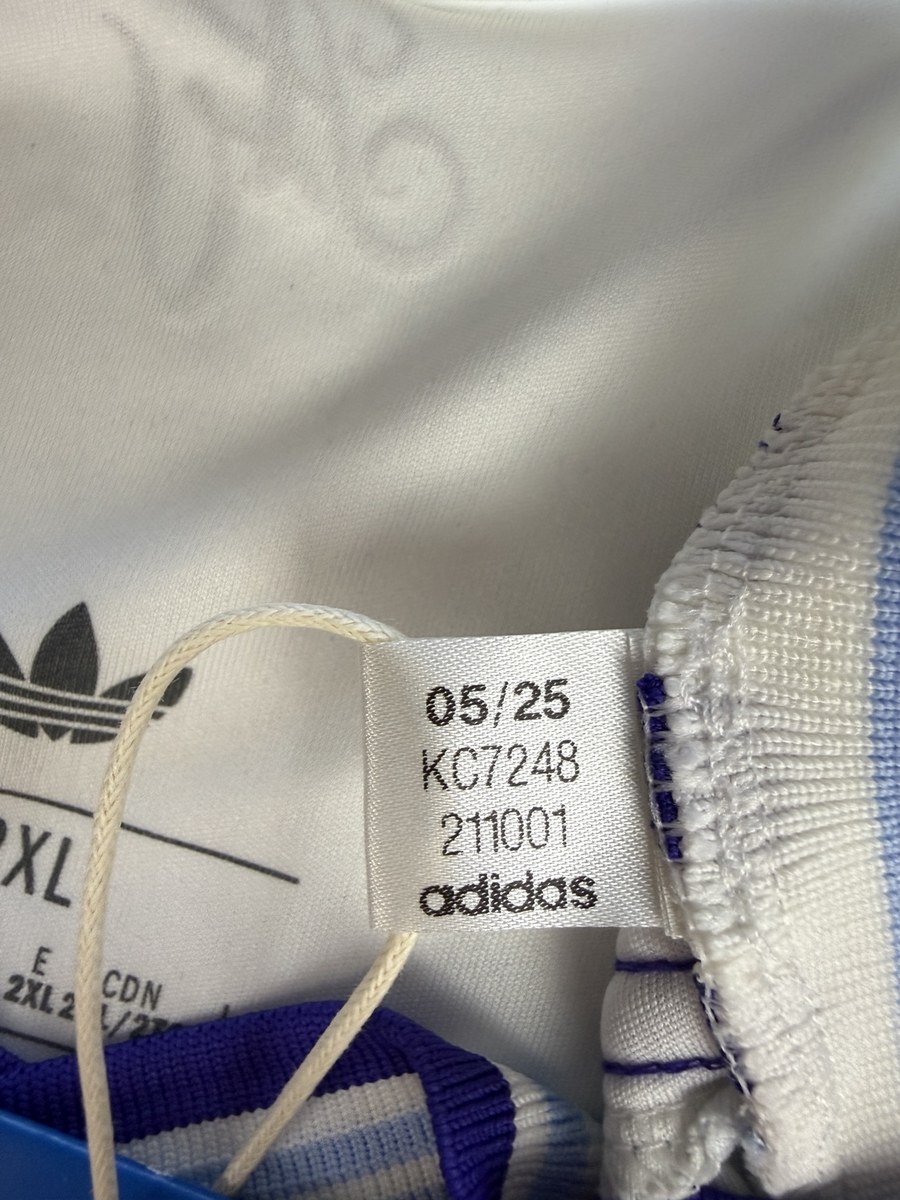
This is exactly the sort of pairing we like to see: the swing tag and internal label tell the same story. That does not replace a full authentication check, but it gives us strong product-identification evidence.
Puma uses its own system
Puma labels and tags look different again. The useful lesson is not to expect adidas-style codes on every shirt. Instead, learn what the manufacturer normally puts on its labels and tags, then check whether the information is internally consistent.
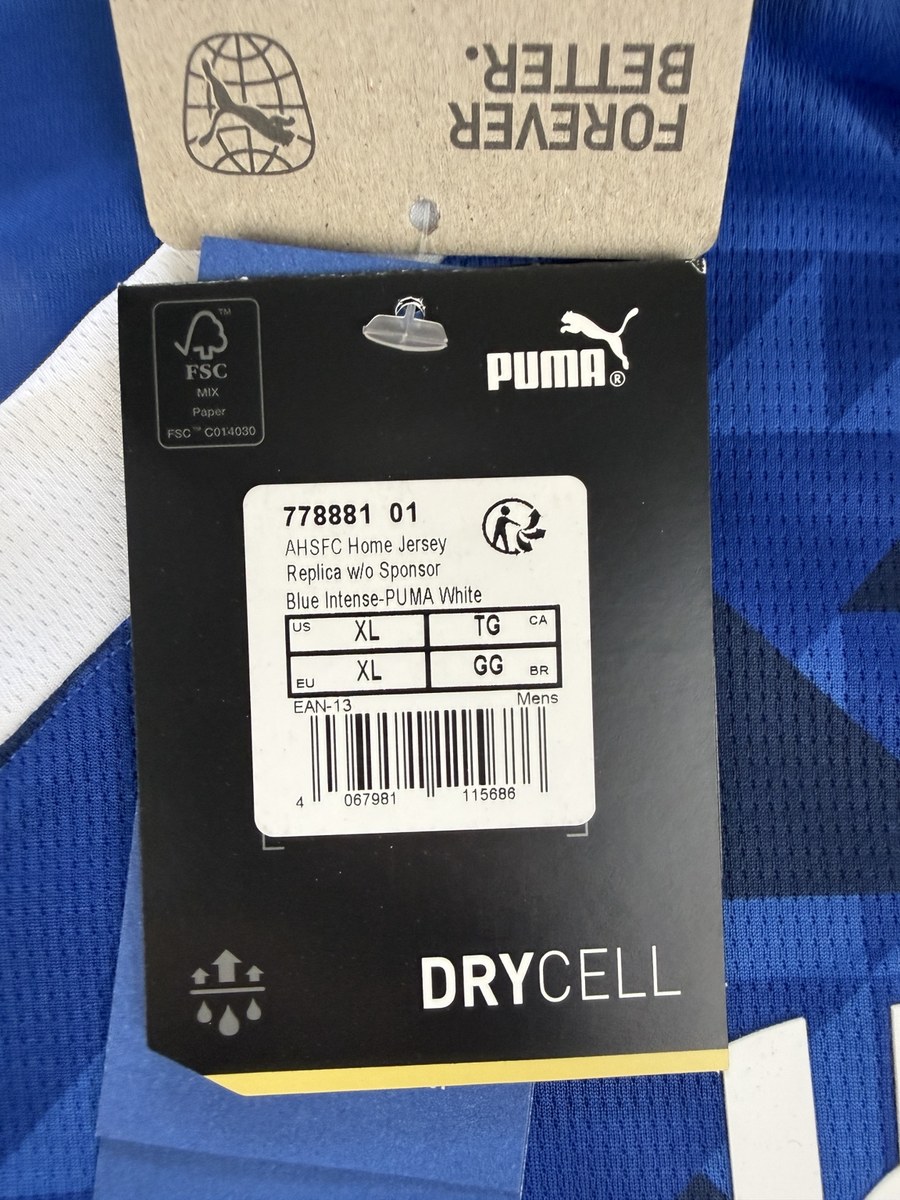
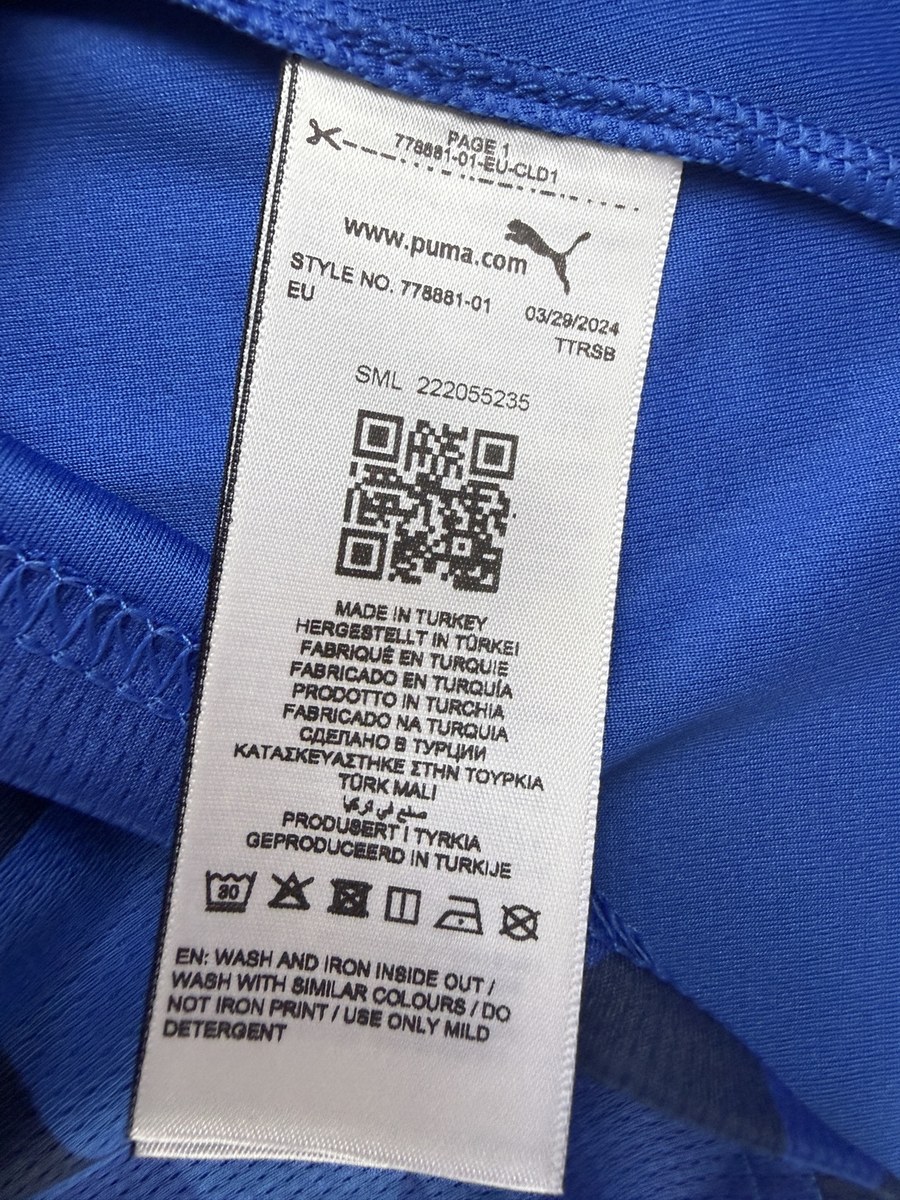
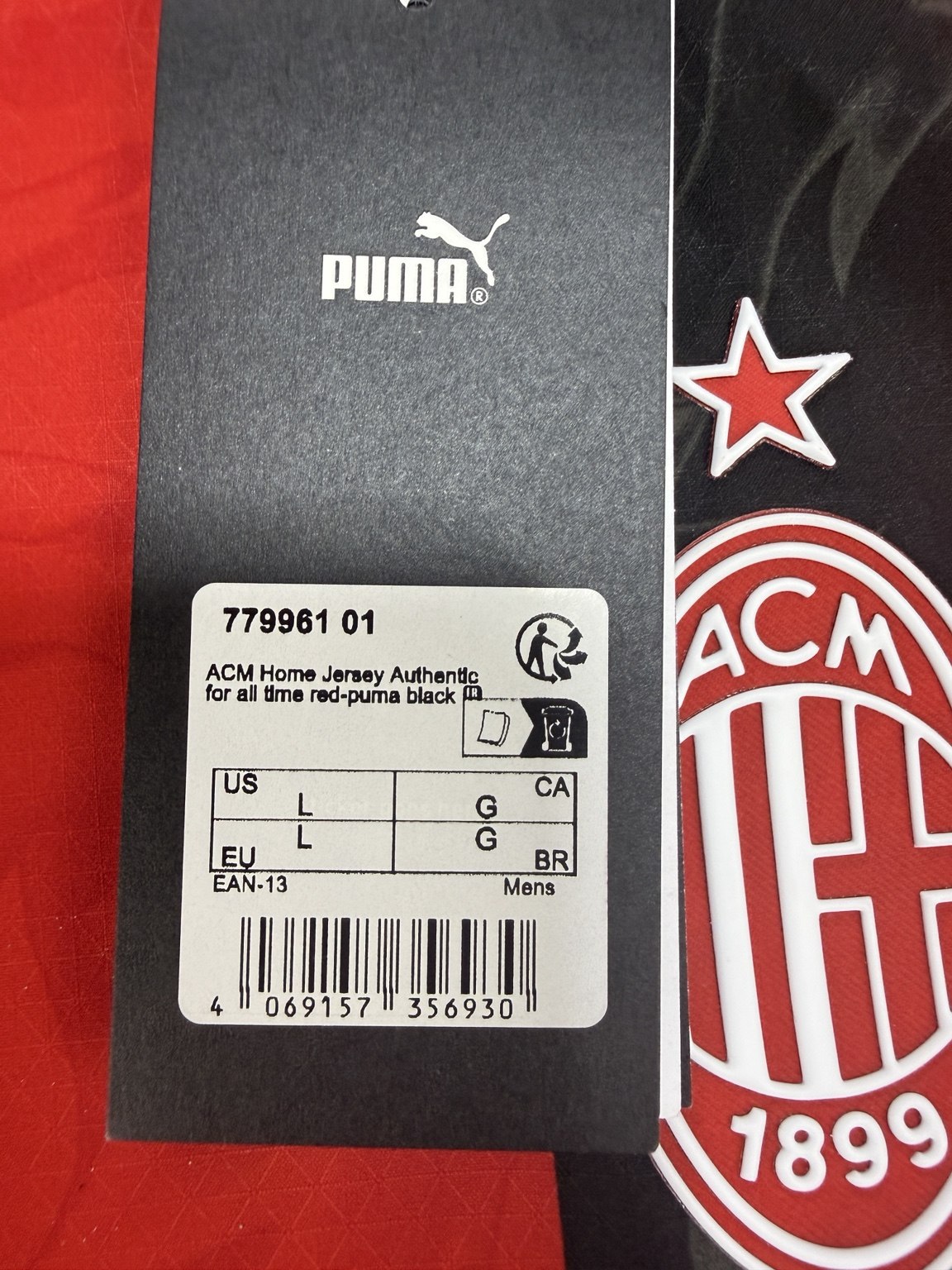
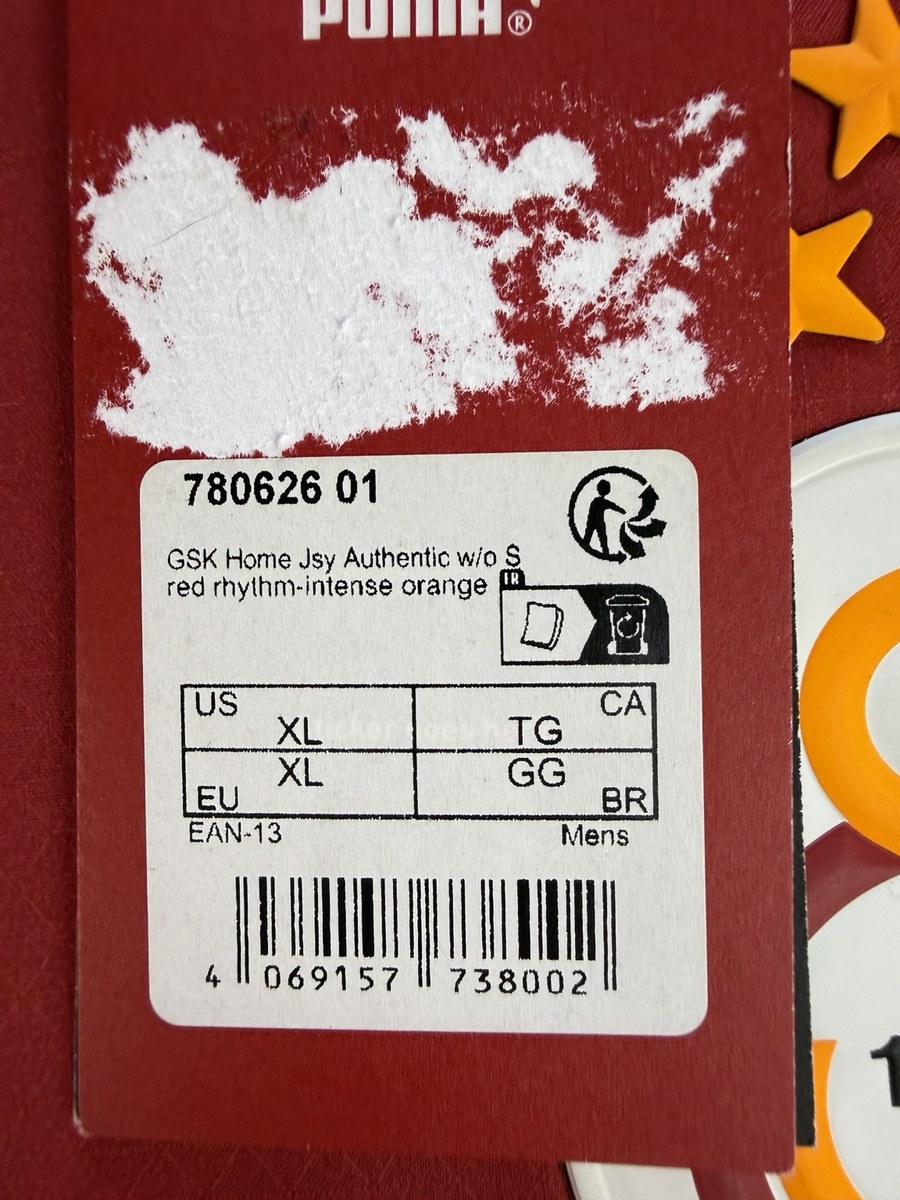
Notice the pattern: the code is useful because we can connect it to a known product. It is not useful because the number itself somehow proves authenticity.
Nike: the code is useful, but look at the whole label
Nike uses its own product-code formats. The same basic approach applies: identify the style code, search it, and compare the result with the physical shirt.
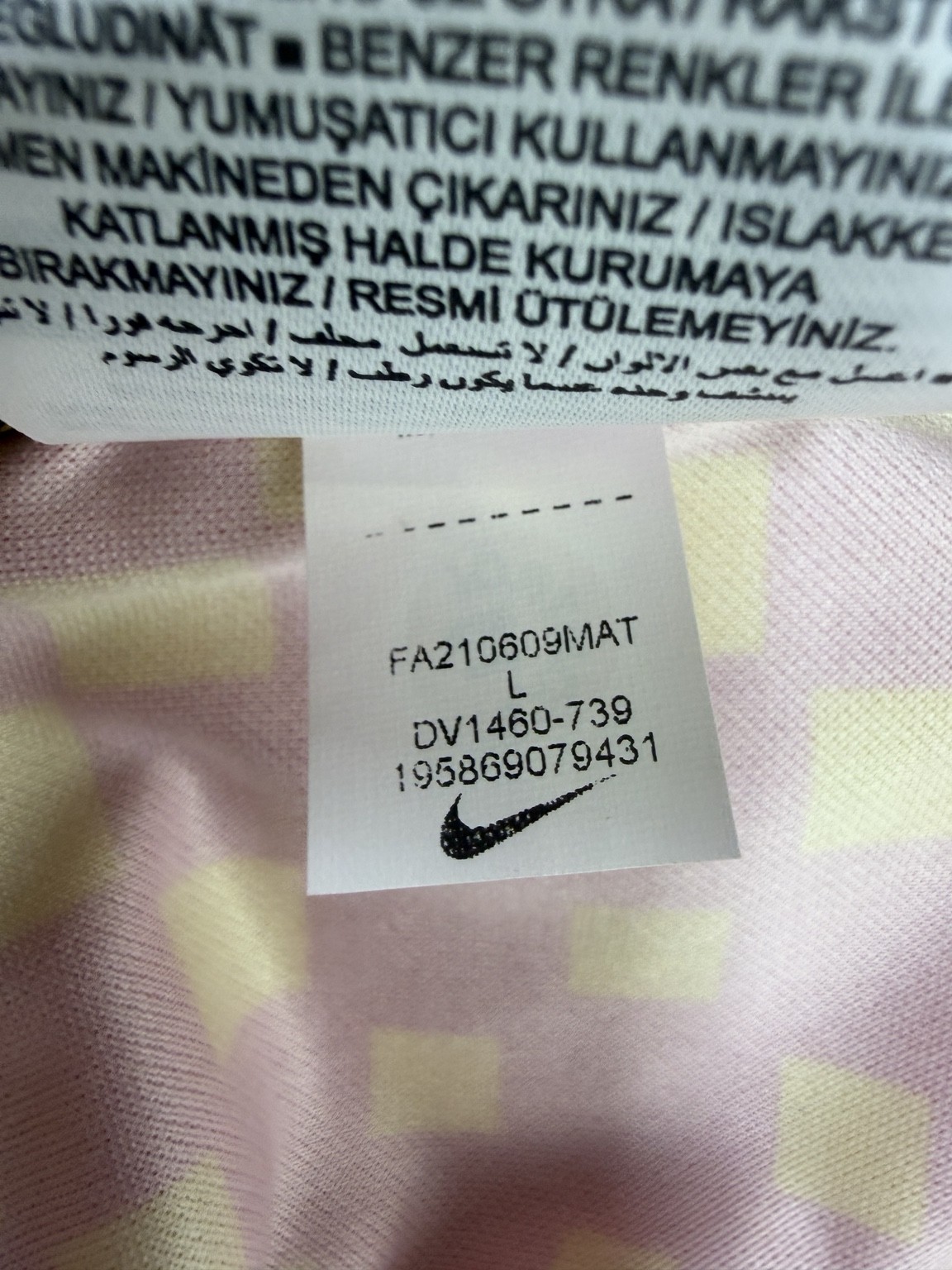
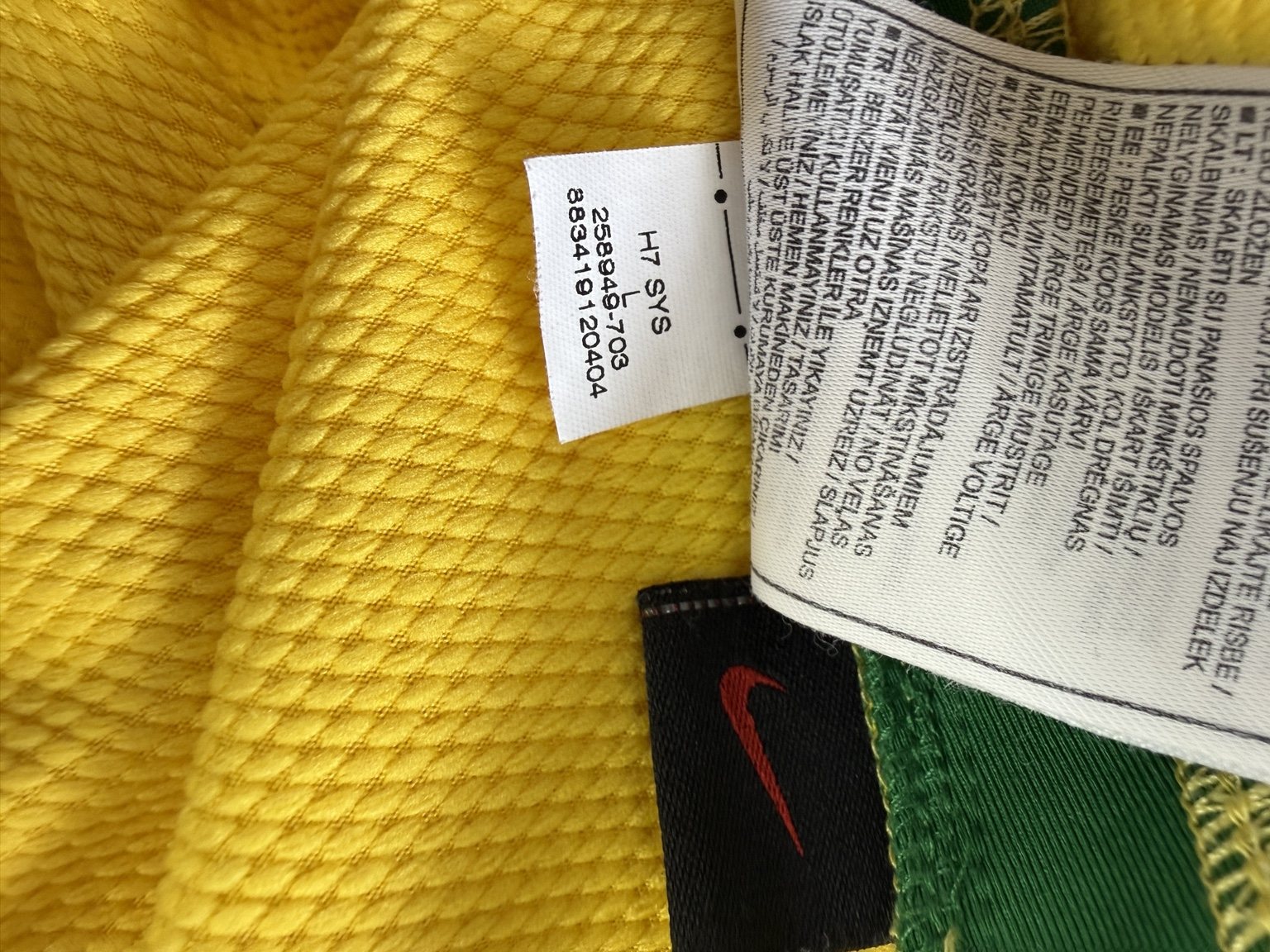
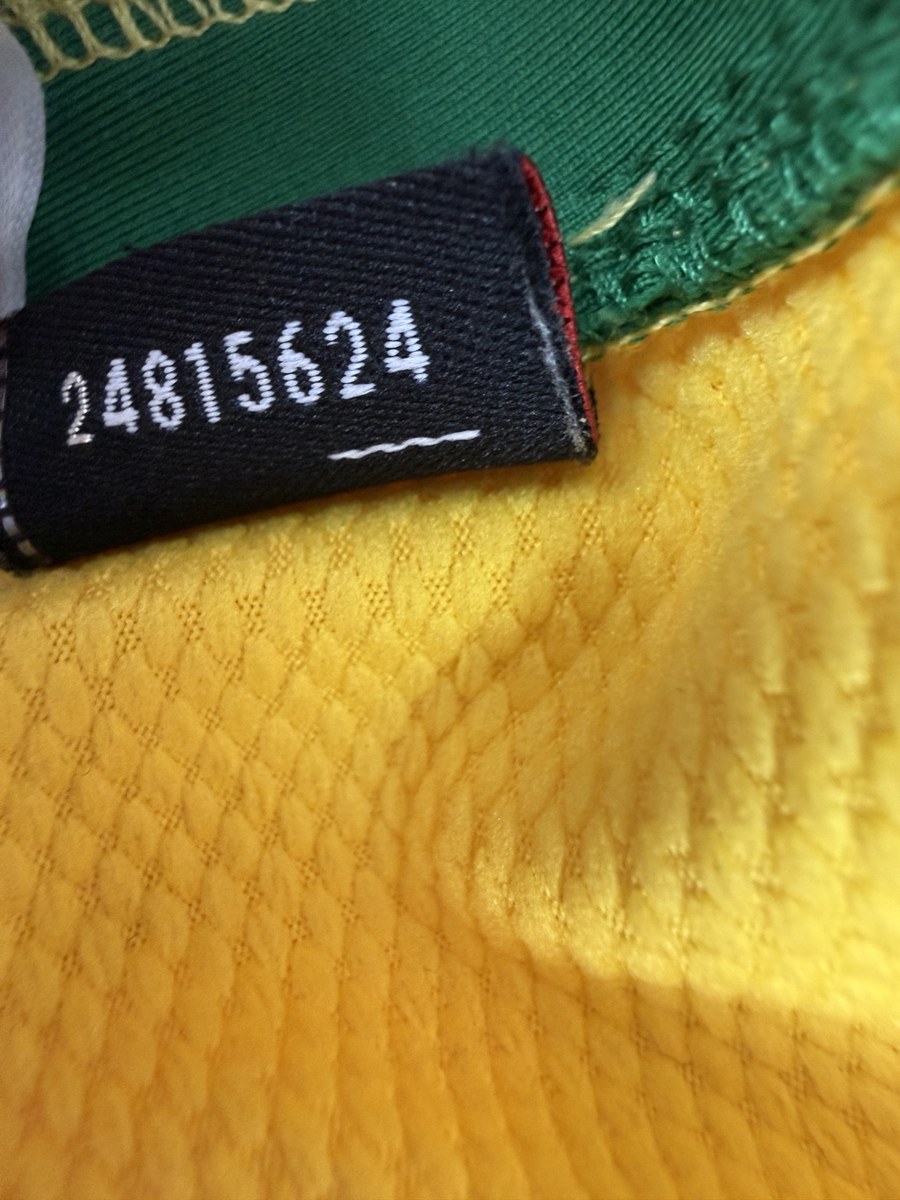
For Nike especially, it is worth checking the style code, size information, manufacturing details, barcode/retail information and the construction of the garment together.
What about the date on the label?
A production date can be useful, but it is not a magic authenticity test.
Look at the Manchester United example above: 02/18 sits beside DP6022. The Aston Villa example shows 05/25 beside KG7248. The Puma Al Hilal label shows a 2024 production date for a 24/25 product.
The important question is whether the date is plausible for the product. A date that makes no sense for the season or manufacturer should raise questions, but a plausible date does not prove the shirt is genuine.
What if the code does not match?
Do not immediately call the shirt fake. First check the obvious possibilities.
- Have you read every character correctly?
- Is the shirt a different version — authentic, replica, goalkeeper, third, junior or women’s?
- Could the label belong to a replacement or altered garment?
- Are you searching the full code rather than only part of it?
- Does the manufacturer use a separate colourway or product identifier?
Once those possibilities are exhausted, a genuine mismatch becomes much more significant.
The code is only one piece of authentication
This is the bit we want collectors and buyers to remember. A product code is an identification tool. It is not a certificate of authenticity.
Our practical checking process
When we receive a shirt for the vault, we do not simply type a code into Google and tick “authentic”. A better workflow is:
- Photograph the labels and tags.
- Transcribe every useful code accurately.
- Identify the exact product.
- Compare the result with the physical shirt.
- Check construction, badges, sponsors and typography.
- Investigate anything that does not agree.
The Liverpool examples demonstrate why this matters particularly well. JV6423 points us towards a genuine 25/26 Liverpool home product. IP8211 and P95985 appear in the counterfeit example. The numbers are useful because they lead us to questions — not because they answer every question by themselves.
The takeaway
Use the product code to identify the shirt. Use everything else to authenticate it.
A good authentication decision comes from several independent details agreeing with one another. When the code, date, labels, construction, badge, sponsor and product all tell the same story, confidence rises. When they contradict one another, stop and investigate.
Continue the authentication guide
Next we’ll look at the labels themselves — including manufacturer tags, product codes, date codes, construction details and the common signs found on counterfeit shirts.
Read the authentication guide →